When you farm or grow anything, planning ahead is second nature. But with El Niño conditions being forecast to continue through summer, this might be more important than ever. How will you cope with extended dry periods or drought should these occur?
One way is to make sure crops and pasture are growing strongly before the dry hits, taking advantage of any rain we might still get by applying some carefully timed fertiliser.
Drystock farmers for example, may like to reconsider their fertiliser plans and apply some spring fertiliser to ensure growth into autumn. And wherever silage, baleage or hay has been made, a post-harvest dressing applied now will support pasture recovery and a faster return to the rotation.
Split application time
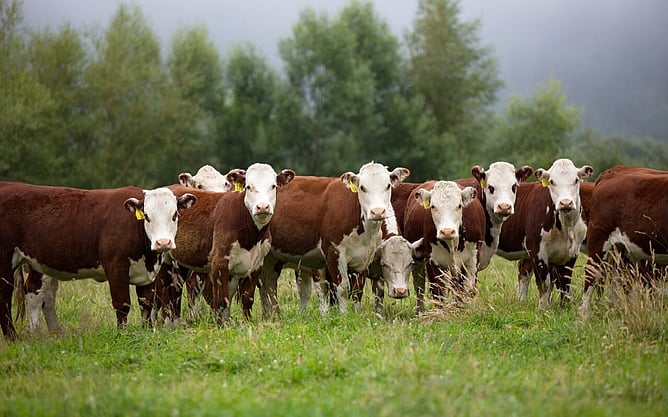
Although autumn is traditionally the time for drystock farmers to dress their pastures, in a season where dry weather is forecast, it may work well to split fertiliser application times across different farm areas. For example, pastures used for finishing beef and lambs could benefit from an early dressing of nitrogen and sulphur since plants are actively growing, and soil reserves can be lower at this time of year.
Extend growth into summer
In a case like this, DAP (diammonium phosphate) could be the choice. But while it can create a flush of growth very quickly, DAP won’t provide the extended growth needed to build a pre-drought feed wedge going into summer.
However, if you choose a fertiliser blend like Fertco’s 44 Magnum, you not only get fast-acting nitrogen and sulphur to deal with any immediate nutrient shortages, you also get controlled release urea, designed to sustain pasture growth for several months.
A phosphate source that will be a safer choice and provide extended growth is dicalcic phosphate (Dical or DCP). Unlike DAP, the phosphate in Dical is not soluble, but released more slowly to the soil. It’s also less acidic around the granule, so less prone to being ‘locked up’ by iron and aluminium ions in the soil. When rain finally comes, the phosphates in dical fertilisers like Fertco’s KingPhos, Replenish, and DCP-Max are still available.
A year to be a little inventive
A further reason to be a little inventive and find alternatives to applying DAP for late spring growth is that DAP is expensive, and is likely to be so for the next few seasons.
In NZ, we import all our DAP. So a weak $NZD doesn’t help this situation. But a major contributing factor to the high price of DAP is the extremely high international cost of sulphur in the form of sulphuric acid, significant quantities of which are required in its manufacture.
A cost-effective alternative to DAP would be a blend of dicalcic phosphate, polymer coated urea (PCU), and sulphate of ammonia (SOA). Adding the SOA to the blend provides a cheaper form of sulphur and some ammonia, a quick-acting form of nitrogen that is less susceptible to volatilisation.
Another example where being a little inventive may pay off concerns potash. Potash drives clover growth and the natural nitrogen cycle. Since potash has not suffered the same inflationary impacts as sulphur, nitrogen, and phosphate, it might work well to apply a small amount of potash and nitrogen when a rain event is forecast.
Apply post-harvest fertiliser to hay and silage paddocks
Recently harvested paddocks where nutrients have been removed should be fertilised now to avoid a drop in soil fertility, a slow recovery and a delayed return to the grazing round. Any exposed soil allows weed seeds to quickly germinate and establish.
Nutrients likely to be needed are potash, phosphates, sulphur, and magnesium. A small amount of nitrogen will also help the pasture quickly recover the soil. You can find all these nutrients in the correct ratios in Fertco’s Post-Harvest Blend. As always, we recommend soil testing before application.
With weather forecasters already reporting drier than normal conditions in many regions, you might like to consider taking advantage of whatever rain does fall by applying some fertiliser now.
This article was published in the Coast & Country News.


