In recent columns, we’ve talked about polymer coated urea (PCU). We’ve explained how PCU is more nutrient efficient than conventional urea because the nutrients are gradually released from the granule to closely match plant growth requirements. We’ve also noted that the best PCU coatings are made from ultra-thin biodegradable vegetable oils.
But what we haven’t said much about is how to integrate PCU into your farming practices to get the best from it. One of those ways is to apply PCU now with your autumn fertiliser to build a winter feed wedge.
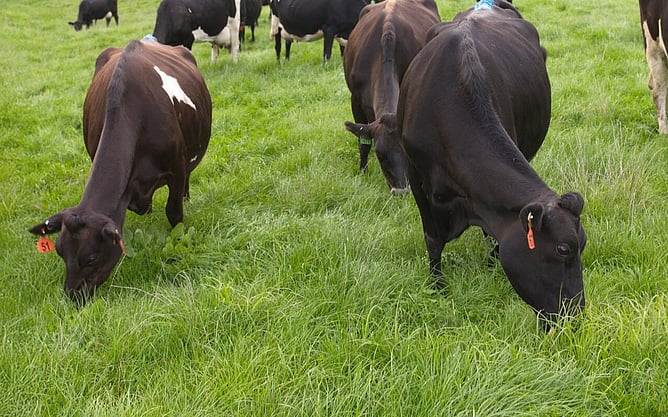
Building a winter feed wedge
Autumn is a key time to build feed reserves for winter. Soil moisture levels are usually improved from autumn rain, and temperatures are still warm enough for good pasture growth. To achieve optimum growth rates at this time of year, an application of nitrogen is often made.
For many farmers, urea has been the default option for doing this. However, there are several reasons why switching to PCU can simplify fertiliser management during the next few months.
Urea is prone to wastage
Urea is highly soluble and prone to wastage from volatilisation and leaching. In NZ, late autumn, winter, and early spring are when these losses mainly occur. This can make fertiliser management time-consuming.
For pastoral farmers, losses to the atmosphere are difficult to avoid because the urea is applied to the soil surface.
One solution has been to use nitrification and urease inhibited urea. These products are indeed helpful for slowing such losses while conditions are dry and temperatures are high. But as soon as it rains, the nitrifying bacteria get busy and transform the urea to plant friendly nitrate very quickly. The problem with this is that the rate of nitrification is usually faster than plant growth rates so there is a high probablility the nutrients are leached away and wasted. Heavy rain events only exacerbate these losses.
Managing N loss
To manage nutrient loss, it’s often suggested that several urea applications should be made and timed carefully to avoid heavy rain. All this gets very tricky in the winter months when it’s constantly raining, there’s mud everywhere, and things are getting busy.
However, if you use PCU instead of urea, managing N loss becomes far less of an issue. In fact, a single application of PCU early on in autumn is all that is needed. This is all possible because of the biodegradable polymer coating.
Less waste with PCU
The polymer coating prevents losses from volatilisation and leaching, only diffusing out from the granule when triggered by the same temperatures conducive to plant growth. This results in minimal wastage and removes the need to continually ‘top’up’ soil N supplies to keep growth rates up.
Additionally, heavy rain events do not affect the rate of nutrient release from the PCU granule. Again, this means that the nutrients remain safe inside the granule and available for plants over a longer period. As the research for top-of-the-range PCUs like Fertco’s 44 Magnum and N Smart shows, nutrient release is controlled so well that a single application can deliver sufficient N to support growth rates for up to three months.
PCU blends with other fert
Another advantage that PCU has over urea is that the protective coating allows the PCU to be safely blended with other fertilisers. So you can apply PCU with your autumn fertiliser if that suits, saving time and spreading costs.
Less hassles with PCU
So when you choose PCU over conventional urea, you’re not just substituting one nitrogen product for another. You’re avoiding the risk of environmental wastage and gaining more from you fertiliser budget by utilising the nutrients you’ve paid for. You’re also spending less on cartage and spreading. So you can confidently apply what is needed to create a winter feed wedge with far less hassles around application.
This article was published in the Coast & Country News.


