In the farming world, planning ahead is essential. If you’re aiming to boost summer pasture quality, re-grass paddocks in the autumn, or produce some autumn-saved pasture before the cold weather sets in, then now is the time to prepare.
Applying a PCU now will boost pasture growth for summer.
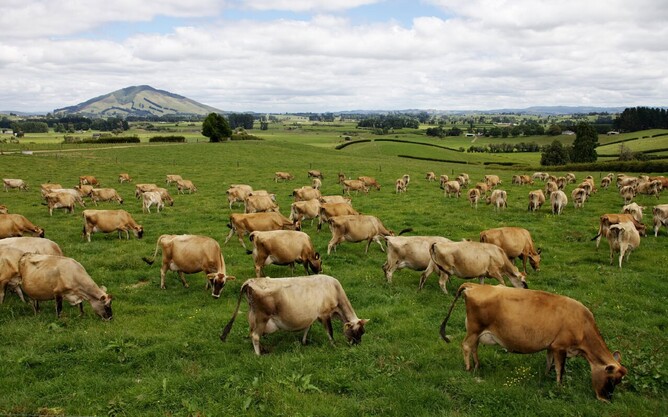
Summer pasture quality
For dairy farmers, boosting pasture growth now with an application of nitrogen (N) can help to meet summer feed demands. Response from any N applied will be good because soil moisture levels are still fine, and temperatures are warm, but not too hot.
However, while an application of urea will produce an immediate growth response, the nutrients are highly soluble and prone to loss in pasture that is irrigated or subjected to heavy rain which can still occur in December. Any nutrients that plants don’t immediately use are likely to be lost to the environment. That’s not very efficient.
A better choice is a polymer-coated urea (PCU). PCUs are granules of urea that are coated with a protective substance, the best coatings being biodegradable. They are more efficient because the nutrients are gradually released from the granule through the coating and only when there is sufficient moisture in the soil.
So in the summer when it’s dry, the nutrients remain in the granule. When it does rain, the nutrients are released and available to plants exactly when they need them. Perfect for boosting pasture growth now but also for supporting growth over the next few months.
Because they are more efficient, PCUs like Fertco’s N-durance, a blend of PCU and N-inhibited urea, can be applied in smaller quantities than urea.
Since the nutrients stay around for longer, a single application now will last all summer. That’s one less thing to worry about during the holiday season.
Re-grassing in the autumn
Autumn is the perfect time to establish new perennial pasture because temperatures are milder, the soil is still warm, and moisture levels are usually higher again after some autumn rain. But select the paddocks you aim to re-grass now and soil test them.
A soil test will reveal any critical deficiencies, but also tell you which of the major nutrients like phosphorus, potassium, and sulphur will be needed to get new seedlings off to a strong start. Soils lacking fertility allow unproductive pasture plants (a.k.a. weeds) like brown top, Californian thistles, and meadow grass to out-compete newly-sown grass. It also helps to chew the chosen paddocks out before sowing to keep any existing weeds small.
Autumn fertiliser
For sheep and beef farmers, now is a good time to start thinking about autumn fertiliser. Whether maintaining or increasing soil fertility, phosphates are typically a ‘must-have’ for hill country farms. But the quantity needed will depend on which type of phosphate is chosen.
Superphosphate has been the default option for the majority for many years. But a better alternative is a dicalcic phosphate.
Dicalcic phosphate is not soluble like Super. Because the nutrients must be broken down by soil bacteria to make them plant-available, they’re not prone to losses like the phosphates in Super are. The nutrients are released slowly and plants can access them as they grow. Slower nutrient-release results in better efficiency, and less fertiliser needed to produce the same growth. It also means that dicalcic phosphates are seed-safe, so seeds and fertiliser can be applied together.
An additional advantage is the liming affect that dicalcic phosphate fertilisers have. For example, Fertco’s KingPhos and SeaPhos are two dicalcic phosphates with pH values of 6.5 to 6.7 (pH 7.0 is neutral). In some cases, that means separate dressings of lime can be reduced or may even be unnecessary.
In planning for the autumn, sheep and beef farmers might also consider applying a small amount of PCU with their fertiliser to produce some autumn-saved pasture before conditions get too cold.
Planning ahead allows time to consider trying something different. If you haven’t used PCU or dicalcic phosphate before, now is the time to investigate including them in your fertiliser management programme.
This article was published in the Coast & Country News.


